Drug and Alcohol Treatment in Denver, Colorado
The Raleigh House offers comprehensive treatment for substance use and co-occurring mental health concerns, as well as primary mental health treatment for those who need it. With a 5:1 client-to-clinician ratio and care provided exclusively by fully licensed clinicians, you’ll receive personalized, individualized support throughout your treatment journey.
A live admissions specialist answers, 8 a.m. to 9 p.m. MT, seven days a week. You get the figure before you commit to anything.
Accreditation & Licensure
Verify Your Insurance — Confidentially
An admissions specialist reviews your benefits and contacts you directly — asking questions does not commit you to treatment.
"*" indicates required fields
Nothing begins until you decide how you want to proceed.
You May Not Need Inpatient Care: Here Is How to Find Out
Most people who call are not sure what they need, or whether what they are dealing with is serious enough to warrant treatment at all. That question is the first thing our admissions team works through with you, and there is no cost to ask it.
The Raleigh House offers the full continuum of care at both locations, so the conversation is about what fits, not about what we happen to have available.
Why We Start With the Root Cause
The symptom is usually what makes someone call. It is rarely where the work is. Depression that has not responded to outpatient care, anxiety that has narrowed a life down to a few rooms, trauma that shows up as something else entirely. Treating the presentation without reaching what is driving it tends to leave the cause intact.
Our clinical approach is the East-meets-West model: evidence-based clinical care integrated with experiential and somatic work, on the same treatment plan.
Evidence-Based Clinical Care
- Cognitive Behavioral Therapy (CBT)
- EMDR
- Dialectical Behavior Therapy (DBT)
- Psychiatric support
Experiential & Somatic Work
- Equine therapy
- Art therapy
- Movement and nutrition
- Somatic modalities
What That Looks Like in Practice
How Long Recovery Actually Takes
This is the question almost everyone asks, usually with a harder question behind it: how long will I be away from my family, my work, my life.
The honest answer is that the nervous system needs time to reset, trauma work requires safety before it can begin, and attachment wounds heal through repeated corrective experience. None of that is fast, and shorter programs are not a smaller version of the same result.
90 Days, Plus 90 Days of Outpatient
The gold standard at The Raleigh House. Ninety days of detox, stabilization and inpatient care, followed by ninety days of outpatient work where the skills meet real life.
60-Day Inpatient Program
Time to get underneath the presenting condition rather than stabilizing and heading home. Still followed by planned step-down care.
30-Day Inpatient Program
Appropriate for some clients depending on clinical picture and history. Your admissions clinician will tell you honestly whether it is appropriate for yours.
Step-down care is planned, not optional, and discharge planning is part of the clinical work rather than a task on the last day.
Duration and outcomes: Nishimoto et al., PMID 15540492.
What This Costs and How Quickly You Will Know
We work with most major behavioral health plans, and we work with out-of-network and self-pay clients.
What you pay depends on your plan, your deductible, and the level of care you need, which is why no honest number fits on a web page. What we can do is verify your benefits while you are on the phone and tell you your actual out-of-pocket before you commit to anything.
If You Are Calling for Someone You Love
Watching someone you love struggle, and not knowing whether to push or wait, is its own kind of exhausting. Many of the people who call us are not the person who needs treatment. They are a wife, a father, an adult daughter who has run out of things to try.
You do not need your person’s consent to call and ask questions, and you do not need them to be ready. Family work is built into the clinical model here, not added on at the end.
Call 720-240-4765What Happens When You Call
You reach our admissions team directly, not a national directory or a lead service.
A clinical conversation, roughly 20 to 30 minutes. No commitment.
We verify your benefits on the call and tell you what you would pay.
If we are the right fit, we schedule admission. If we are not, we say so and point you toward what is.
We answer 8 a.m. to 9 p.m. MT, seven days a week.
Questions People Ask Us
Yes. Our Residential Program for Mental Health was built for exactly that, and The Raleigh House is one of the very few centers in Colorado that does not require a co-occurring substance use disorder for admission.
In everyday use they mean the same thing: living on site while you receive treatment. "Inpatient" tends to suggest a more medical setting and "residential" a more home-like one. At The Raleigh House you get both, with psychiatric and medical support on site in a residential environment rather than a hospital unit.
Our clinical standard is 90 days of inpatient care followed by 90 days of outpatient care, and we also offer 60- and 30-day inpatient programs. Which is right depends on your clinical picture, not on a schedule. Your admissions clinician will walk through it with you.
Often, yes. We work with Aetna, Beacon, Blue Cross Blue Shield, Cigna, Humana, and TriWest, among others. Coverage depends on your plan and on medical necessity criteria, and we verify it for you on the first call.
Individual therapy at least twice a week, clinical groups, and experiential work you help choose through elective tracks: art therapy, equine therapy, EMDR, nutrition education, rock climbing, career counseling, personal training. Meals follow our Pro-Recovery Diet, prepared on site. Programming runs seven days a week.
Yes. Family involvement is part of the clinical model. Visiting schedules vary by location and program.
Why The Raleigh House
Two Environments, One Clinical Standard
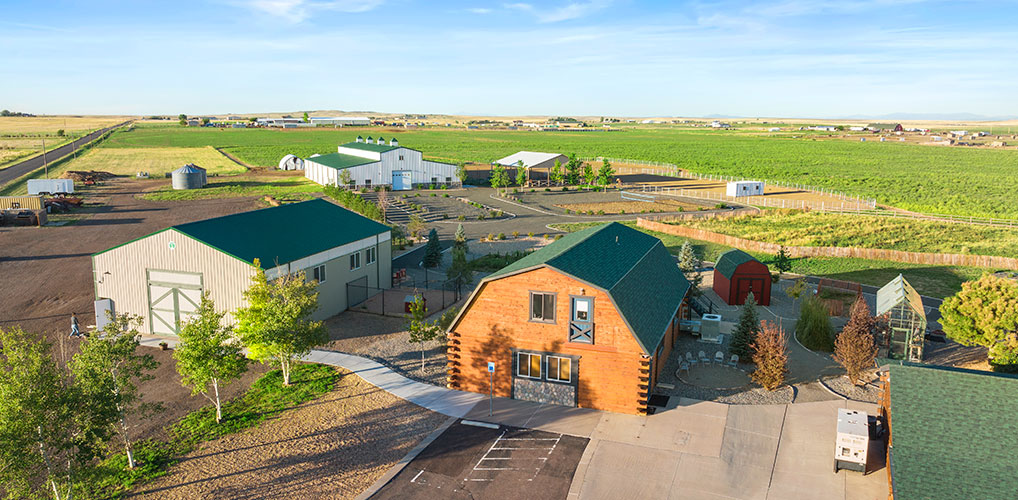
- The Ranch — 40 acres in the Colorado countryside, roughly 30 minutes from downtown Denver, featuring equine therapy, horticulture therapy, rock wall, and four full-time chefs.
- The Center for Integrative Behavioral Health — In the Denver Tech Center, featuring an infrared sauna, halotherapy, vibroacoustic therapy, catered meals, and a full gym.
Highlights of Our Programs
- The clinical standard is identical at both. You choose the environment, not the quality of care.
- We are accredited by The Joint Commission, licensed by CDPHE and BHA, and LegitScript-certified.
- We treat adults 18 to 88+.